
English| USD
Suggested for you
More currencies
Choose a language
Tour B is the quieter of El Nido's four standard island hopping routes, built around sea caves, a shifting sandbar and sheltered shorelines rather than the famous lagoons. This Tour B El Nido Itinerary guide maps what each stop actually involves, how long boats linger, and where the snorkelling repays the swim. Read it before choosing between routes, not after.
Quick answer
Tour B runs as a single daylight trip: boats operate 09:00–16:00 every day of the week, departing by 09:00 and returning by 16:00 to use the full daylight for island stops. Every visitor also pays the 400 PHP Eco-Tourism Development Fee once, valid for 10 days. Rough seas, not schedules, are the usual reason a stop gets swapped.
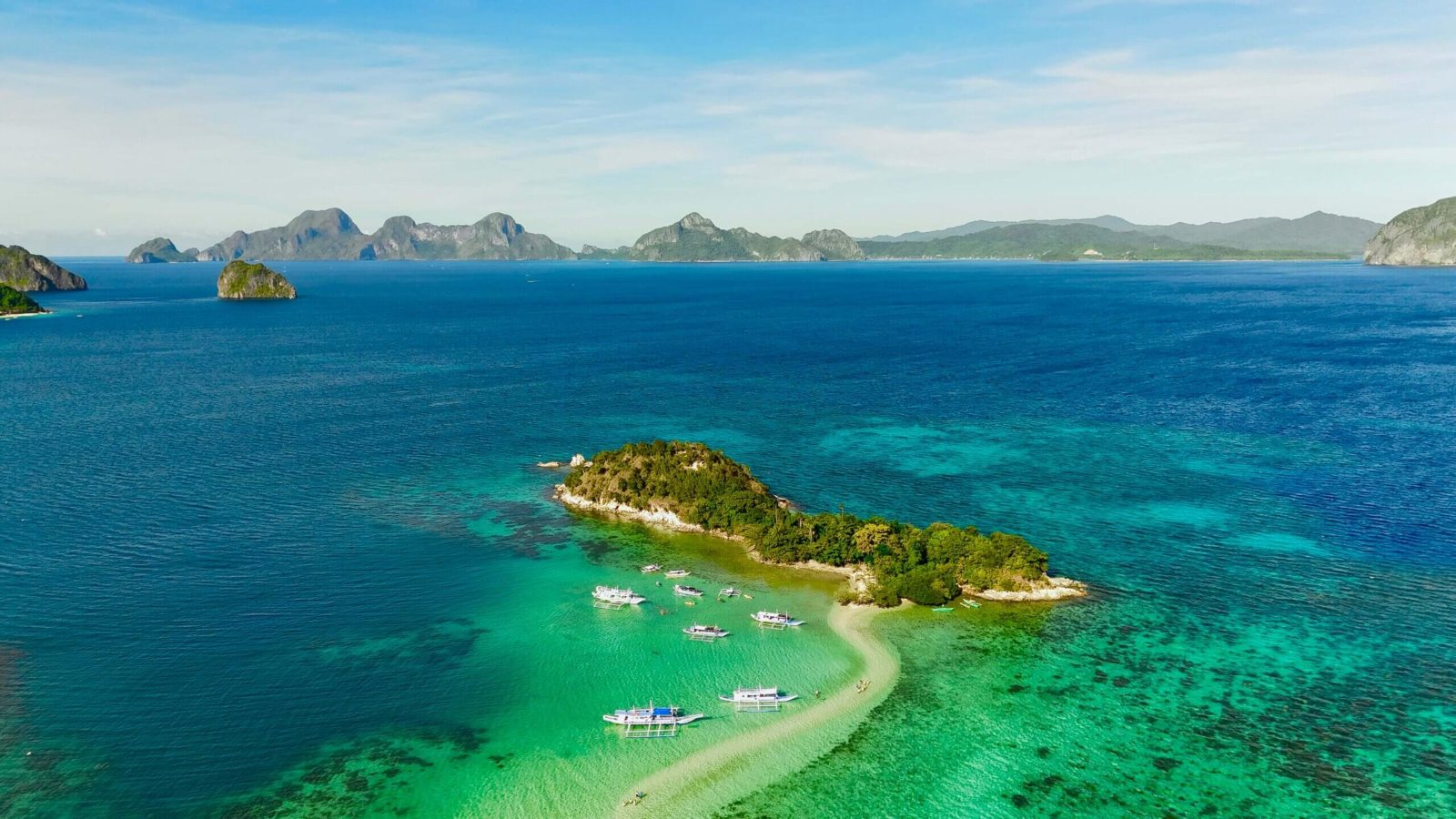
El Nido's four standard routes were not designed by marketing departments. They were fixed by the municipal tourism office and the boatmen's associations, which is why every operator in town sells the same lettered island hopping routes in the same order. Locals call the practice paglilibot sa isla; the paperwork calls it Tour A through D. The lettering predates most of the resorts now scattered along Bacuit Bay. A Tour B El Nido Itinerary therefore varies far less between boats than first-time visitors expect; what changes is the bangka, the lunch, and the captain's reading of the bay that morning. Tour B sits apart from the better-known lagoon route. It leans on sea caves, a tidal sandbar and sheltered shorelines rather than the karst amphitheatres of Miniloc. Snake Island's spit, the low mouth of Cudugnon Cave, Cathedral Cave's rock wall and the palm line at Entalula Beach form the recognisable spine, with Pinagbuyutan Island rising offshore as the day's landmark. Reef quality shifts with the season. In autumn, once the southwest monsoon loosens its grip, visibility usually improves through October and November, and boats reach the outer stops more reliably. The route is sold as a day, not a timetable. Boats leave Corong-Corong or the Buena Suerte beachfront in a single morning wave, and the sequence is reordered on the water when wind, tide or a crowded anchorage demands it. Guides tend to front-load the caves while the light is low and save open swimming for the middle of the day. Nothing on the route is ticketed individually; the bay is the attraction and the boat is the access. Lunch is cooked on a beach, usually grilled fish and rice, and it anchors the circuit rather than interrupting it. Research pays off here because the choice is comparative. Travellers weighing an El Nido island hopping tour against the lagoon circuit, or planning to combine both across two days, benefit from knowing which route carries the caves and which carries the lagoons. Shade is limited on the sandbar, and several stops are reached by swimming from an anchored outrigger rather than by dry landing. That detail shapes a day more than the order of the names. Used that way, a Tour B El Nido itinerary becomes a planning tool: it sets expectations for swimming, shade and time ashore before any booking page is opened.
“The letters are fixed; the sea is not, and Tour B's order is decided on the water rather than on paper.”
This plan suits first-time visitors joining a standard shared boat Tour B, the Snake Island circuit, which runs as a single full-day loop with departures around 09:00 and a return to El Nido town by 16:00. The sequence below reflects the order most operators follow, with roughly 45 to 90 minutes at each stop and 15 to 30 minutes of boat transfer in between.
Boats load from the main beachfront at low speed, so wading out with dry bags takes 10 to 15 minutes. The crossing to the first stop runs about 30 minutes north toward Bacuit Bay.
Walk the curving sandbar that links the island to Bacuit Bay at low tide, then climb the short viewpoint trail for the overhead angle. Allow about an hour, including the uphill section.
A short beach landing followed by a crouched entry through the rock opening into the chamber. The visit is brief, usually 20 to 30 minutes, including the walk back across sand.
Boat crews prepare grilled fish and rice on the beach beneath the island's limestone tower. Expect 60 to 75 minutes here, which also covers swimming off the shoreline.
A small enclosed cove flanked by cliffs, used mainly for swimming and resting. Around 45 minutes, with the boat anchored offshore and a short wade in.
Shallow reef sections close to the beach make this the main snorkelling stop of the loop. Roughly 45 minutes in the water before the boat repacks gear.
The run back across Bacuit Bay takes 30 to 45 minutes depending on afternoon swell. Boats pull in by 16:00, landing on the same town beach used at departure.
Island-hopping activities in El Nido operate on a consistent daily schedule to ensure sufficient daylight for all planned stops.
The best period to visit is from December to March when the northeast monsoon provides calm seas and clear skies. Planning your departure within the recommended best arrival window of 09:00–15:00 helps balance travel time with optimal daylight for visiting island stops.
Clear skies, 24°C–31°C
The peak season offers the most stable sea conditions for boat travel.
Hot and dry, 26°C–33°C
Expect calm waters and high temperatures, ideal for swimming and snorkeling.
Rainy season, 24°C–30°C
Occasional tropical storms may lead to boat cancellations during these months.
—
Departing early minimizes congestion at popular locations and allows for quieter exploration.
Verdict: The optimal window is mid-week during the dry season months of January through March, departing promptly at 09:00.
Ensure you have the right gear and documentation before departure.
Everything you need to know about tour b el nido itinerary
A standard tour b el nido itinerary focuses on geological formations, including visits to iconic lagoons, caves, and secluded white-sand beaches. Guests typically explore destinations like Snake Island, Pinagbuyutan Island, and various limestone caverns. These island stops are selected to highlight the natural landscape of the Bacuit Archipelago.
Most excursions follow a set schedule to maximize daylight for island stops. Tours typically depart by 09:00 and return by 16:00, allowing for a full day of aquatic activities. Planning your day within these hours ensures you get the most out of your visit to the limestone cliffs and clear waters.
Yes, all visitors must pay a mandatory one-time 400 PHP Eco-Tourism Development Fee. This fee is valid for 10 days and covers your entry to various protected sites in the region. Ensure you keep your receipt for inspection as you participate in your chosen tour b el nido itinerary.
The boat trip is generally accessible for families, though water conditions and boat access can vary by site. Parents should consider that some island stops require swimming or wading from the boat to the shore. Providing appropriate life vests for children is standard practice across all local operators.
The best arrival window for your departure is 09:00–15:00. Tours typically depart by 09:00 to avoid the midday sun and ensure optimal timing at each location. Arriving early helps ensure you are ready for the boat boarding process at the designated pier.
While you can often find operators on short notice, booking your tour b el nido itinerary ahead of time is recommended during peak seasons. This secures your spot on a boat and helps you coordinate your logistics with your accommodation. Most operators confirm bookings electronically, allowing you to focus on your travel plans once you arrive in Palawan.